
Alleghany County Unclaimed Funds
Alleghany County sits in the Blue Ridge Mountains of northwestern North Carolina. Even in this small mountain community of about 11,000 people, unclaimed money adds up over time. Old bank accounts in Sparta, insurance payouts that were never cashed, and surplus from court sales all become unclaimed property. The state holds these funds until the rightful owner steps forward. A free search takes only a moment and could put money back in your pocket. Residents of Alleghany County should check the state database to see if funds are waiting in their name.
Alleghany County Quick Facts
Alleghany Clerk and Court Surplus
The Alleghany County Clerk of Superior Court handles all court records and surplus funds. When a foreclosure sale brings in more than the amount owed, the extra money is held by the Clerk. This is called surplus funds. The Clerk receives these funds after the 10-day upset bid period ends. Former property owners, junior lienholders, and heirs of deceased owners may all have rights to this money.
The Alleghany County Clerk of Superior Court page on the NC Courts website is shown below.
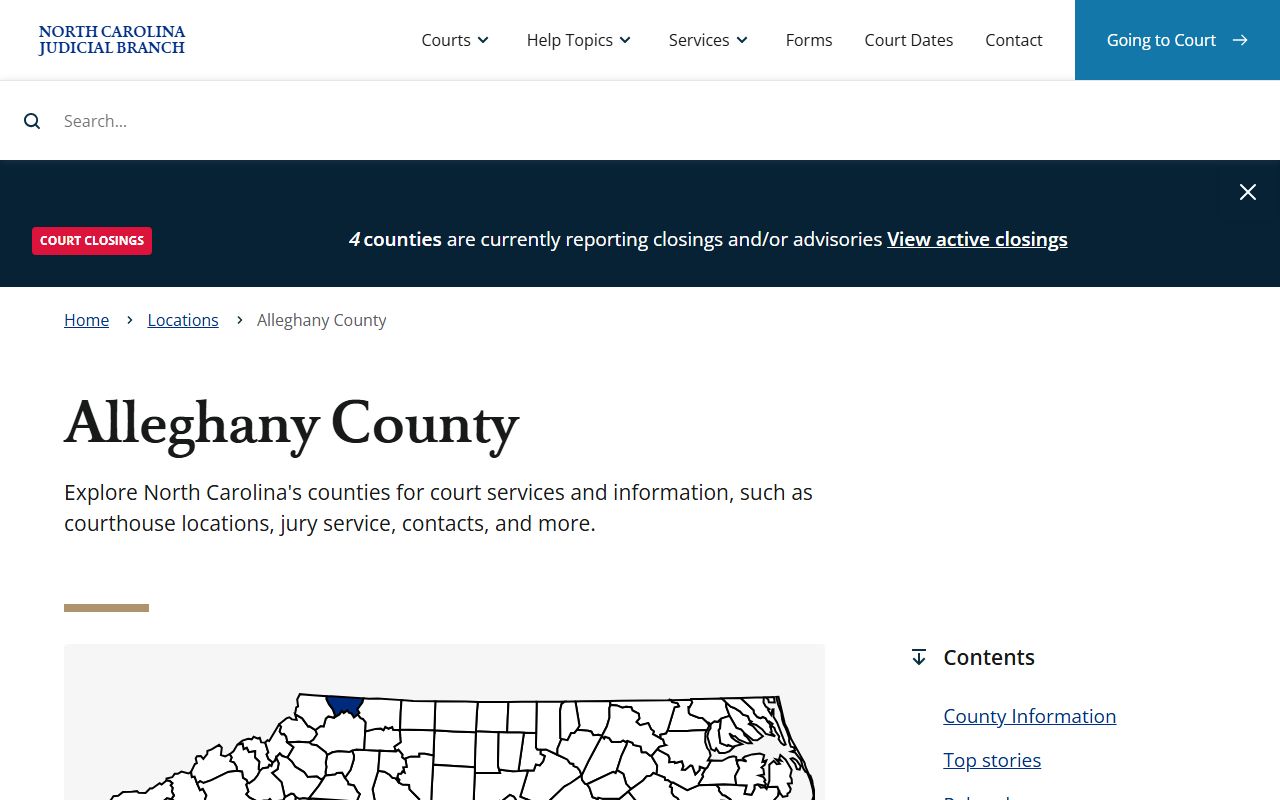
To claim surplus funds in Alleghany County, you must file a petition with the Clerk's office. The petition should explain your connection to the property and why you are entitled to the money. Include supporting documents such as deeds, mortgage statements, or proof of heirship. The Clerk reviews each petition and issues an order if the claim is valid. If surplus funds remain unclaimed for about one year, they transfer to the North Carolina State Treasurer as unclaimed property.
The Clerk's office also holds estate funds, bail deposits, and other court-related money that goes unclaimed in Alleghany County. Check with the office if you believe you have money tied to any court proceeding.
How Unclaimed Property Works Here
Unclaimed money follows a clear path in North Carolina. First, a business or institution holds funds that belong to someone else. This could be a bank, an insurance company, a utility provider, or even a court. When the owner cannot be reached and the dormancy period expires, the holder must turn the money over to the state. The North Carolina State Treasurer then takes custody of the funds.
For Alleghany County residents, this means money from local banks, credit unions, and businesses could be sitting in the state treasury right now. The dormancy period for most property types is five years under Chapter 116B of the General Statutes. Some types have shorter periods. Once the money reaches the Treasurer, it stays there with no time limit on claims. You can search and claim at any point.
Note: Even small amounts are worth claiming since they add up, especially if you find multiple entries under your name in Alleghany County.
Search for Alleghany County Lost Money
The best place to start is NCCash.com. This is the official state website for unclaimed property. Type your name and see what comes up. Matches show the property type, the amount range, and the holder who reported it. You can file a claim right from the search results page.
You can also use MissingMoney.com for a broader search. This national database covers all 50 states. If you have lived outside of North Carolina, it will pick up unclaimed money from other states too. Both searches are free and take just a few minutes.
When you find unclaimed money in Alleghany County, the claims process is straightforward. You will need these items:
- Valid photo ID
- Social Security number
- Proof of your address at the time the money was reported
- Any documents linking you to the specific property
The state processes claims without charging a fee. Small claims are often approved quickly. Larger amounts may require additional review and documentation. Alleghany County residents should respond promptly to any follow-up requests from the Treasurer's office to keep the process moving.
Alleghany County Government Services
The Alleghany County government provides various services that connect to unclaimed money matters. The county was formed from Ashe County during the 1858-1859 legislative session. Sparta, the county seat, carries the nickname "Blue Ridge Heartland." The area draws visitors for its natural beauty, including the New River, one of the oldest rivers in the world.
Alleghany County maintains a Public Records Request Form on its website. This tool can help you access government records under North Carolina's public records laws. If you need documentation about a property, a court case, or any other county matter tied to an unclaimed money claim, this form is a good starting point. The county also publishes a surplus properties list that shows real property the county has declared surplus and may sell or transfer.
For property-related unclaimed money claims in Alleghany County, you may need records from multiple county offices. The Register of Deeds can provide ownership history. The Tax Office can show payment records. The Clerk of Superior Court holds surplus from foreclosure sales. Working with all three offices gives you the strongest possible claim.
Note: Alleghany County's small population means fewer total claims, but the per-person amount of unclaimed money can still be meaningful.
Heir Claims for Alleghany Unclaimed Money
Family members of deceased Alleghany County residents can claim unclaimed money that belonged to their loved ones. North Carolina does not set a deadline for heir claims. The money stays available no matter how many years have passed since the original owner died.
Filing an heir claim requires more documents than a standard claim. You will need the death certificate of the original owner and proof of your relationship. A birth certificate, marriage certificate, or court order establishing heirship works for this purpose. If the estate went through probate, gather the letters testamentary or letters of administration. If there was no probate, North Carolina intestacy law controls who inherits. The Legal Aid of North Carolina office can help residents who need free legal guidance on estate matters and heir claims in Alleghany County.
Nearby Counties
Alleghany County borders several mountain counties. Check for unclaimed money in any county where you have lived or done business. Funds follow the address on file, not your current home.