
North Carolina Unclaimed Money Search
North Carolina holds more than $1.02 billion in unclaimed money. The state Department of State Treasurer runs the NCCash program to return these lost funds. Bank accounts, old checks, insurance payouts, and stock shares are just some of the types held. One in seven people in the country has unclaimed money waiting. Searching is free. There is no cost to file a claim. You can look up your name right now and see if North Carolina is holding unclaimed money that belongs to you. The database updates each week with new records.
North Carolina Unclaimed Money Quick Facts
What Is Unclaimed Money in North Carolina
Unclaimed money is any financial asset that has gone without owner contact for a set period. In North Carolina, banks, insurance firms, and other businesses must turn over dormant accounts to the State Treasurer after a defined waiting period. The Treasurer then holds that unclaimed money as custodian under N.C. Gen. Stat. 116B-52. The state does not take ownership. It simply safeguards the funds until the rightful owner or heir steps forward. North Carolina has run this program since 1970, and the amount of unclaimed money grows each year as new property is reported.
The NCCash program at the Department of State Treasurer manages all unclaimed money and unclaimed property in North Carolina. The official search portal at NCCash.com lets you look up your name for free at any time. Any unclaimed funds found in your name can be claimed at no cost.
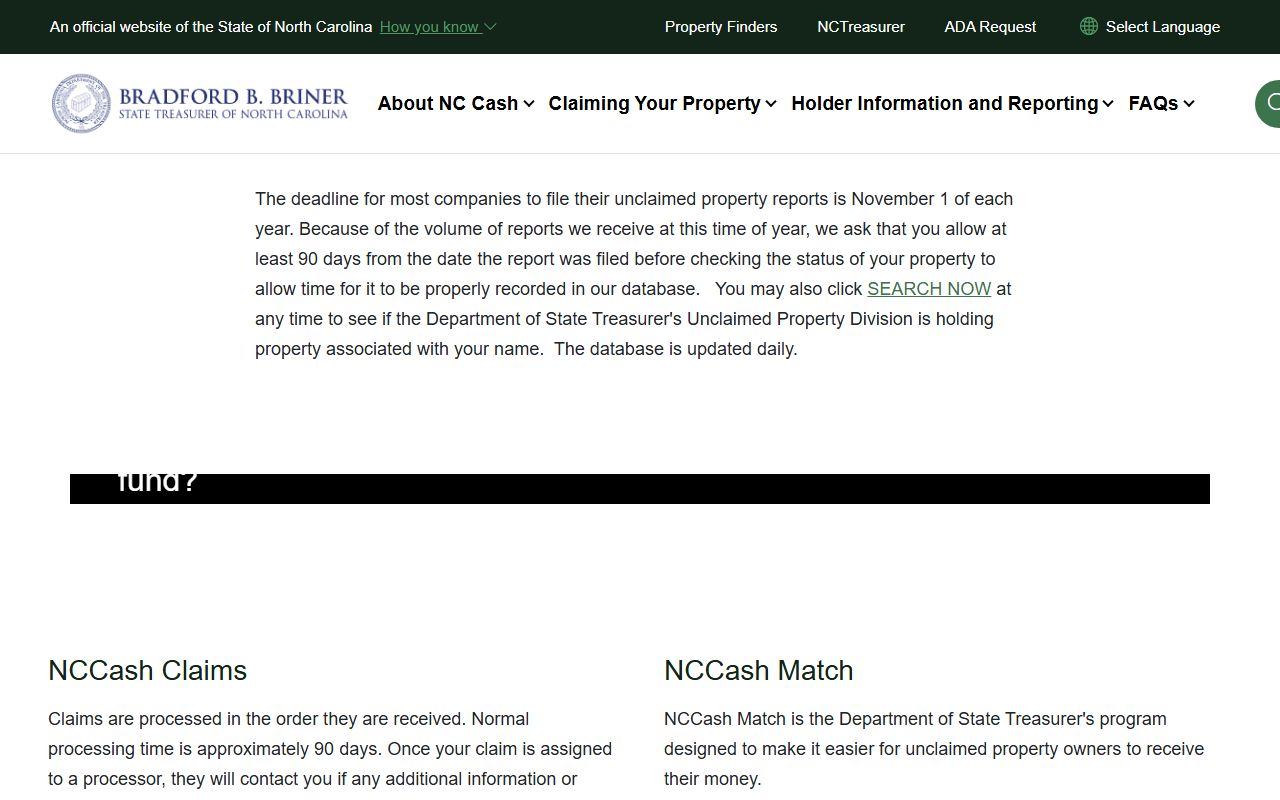
The NCCash website is the main tool residents use to find unclaimed money in North Carolina. It is run by the state and costs nothing to use. Treasurer Dale Folwell has said the office "can't give this money away fast enough." In the most recent fiscal year, North Carolina returned $115 million in unclaimed money to owners. That was the fourth record year in a row. Since 2017, the Unclaimed Property Division has paid out $610.5 million on more than 885,000 claims. Still, the total balance keeps growing because new unclaimed money arrives faster than old claims are paid.
Types of Unclaimed Money Held by North Carolina
North Carolina holds over 100 types of unclaimed money and property. The most common are bank accounts that went dormant after the owner stopped making deposits or withdrawals. Savings accounts, checking accounts, and certificates of deposit all fall into this group. Insurance proceeds are another large source of unclaimed money in North Carolina. When a life insurance company cannot locate a beneficiary, the payout goes to the state. Utility deposits that a power or gas company never refunded also end up in the unclaimed money pool.
Other forms of unclaimed money in North Carolina include uncashed payroll checks, customer refunds, dividends from stocks, and the contents of safe deposit boxes. Bonds, mutual fund shares, and money orders round out the list. Under N.C. Gen. Stat. 116B-53, each type of property has its own dormancy period before it becomes unclaimed. Utility deposits and final pay become unclaimed after just one year. Securities go dormant after three years. Most accounts payable turn over after five years of no contact in North Carolina.
The NC Treasurer's website provides detailed answers about what counts as unclaimed money and unclaimed property in North Carolina.
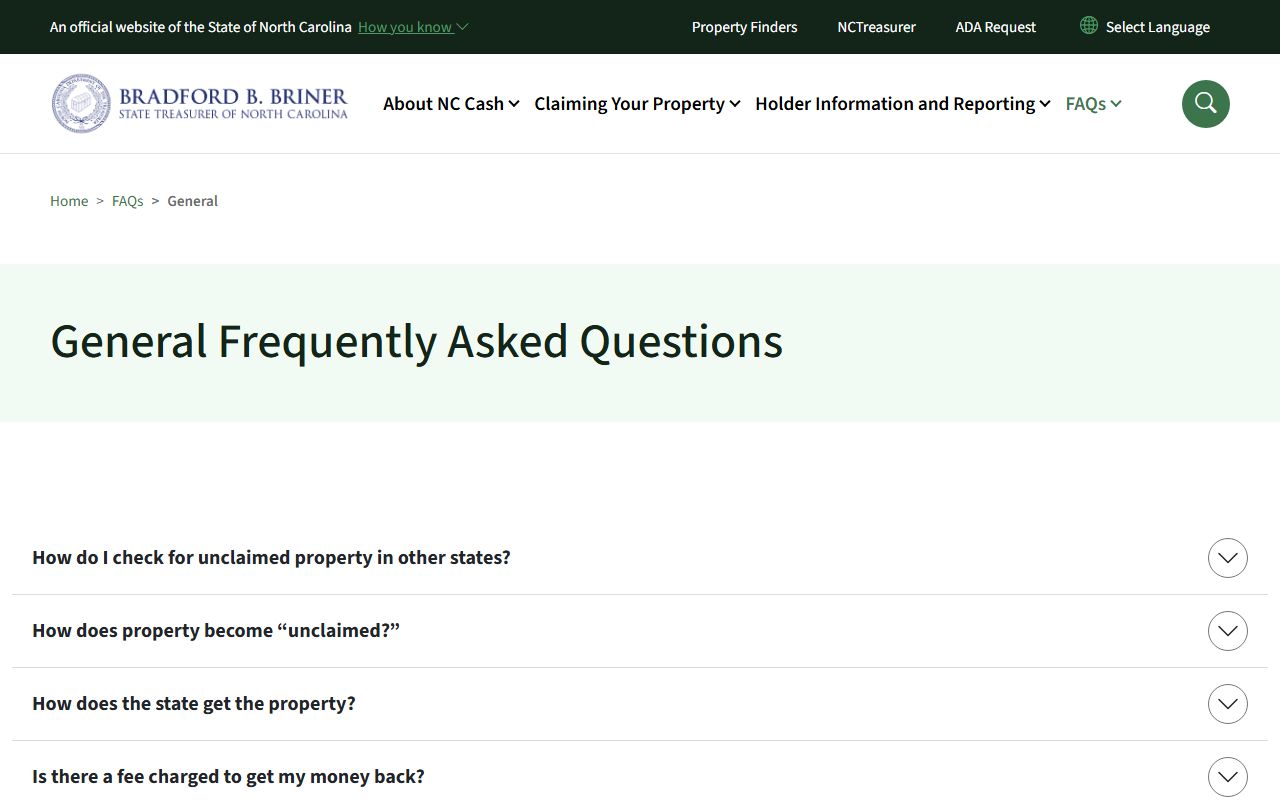
This FAQ page from the state covers the most asked questions about unclaimed money types and how they end up with North Carolina. Safe deposit box items are a unique case. The state may sell tangible property from boxes through GovDeals after holding it for one year. Cash from those sales stays in the fund as unclaimed money tied to the original box holder in North Carolina.
Note: Interest earned on unclaimed money in North Carolina goes to the NC State Educational Assistance Authority to fund student grants and loans.
How to Search for Unclaimed Money in North Carolina
Start your search at NCCash.com. Type your first and last name. Results show up right away. You can search as many names as you want. Try your current name, any past names, and maiden names. Common misspellings are worth trying too. The database updates weekly, so check back often. This search is always free in North Carolina.
The NC Treasurer also runs the NCCash Match program. This tool scans tax records and other state data to find people who have unclaimed money waiting. If your claim is $5,000 or less, NCCash Match may contact you directly. You get a letter in the mail telling you about the funds. The program has cut the time it takes to return small amounts of unclaimed money across North Carolina. You still need to verify your identity to collect.

The claims portal above is where you file after finding unclaimed money in your name in North Carolina. When your search turns up a match, click on the record to see details. The listing shows the property type, the company that reported it, and the amount if available. From there you can start a claim online through the NCCash claims system. The whole process begins with that first name search, so try it now for North Carolina.
Filing a Claim for North Carolina Unclaimed Money
Once you find unclaimed money in your name, you need to prove you are the rightful owner. North Carolina requires certain documents based on the type and value of the unclaimed property. Under N.C. Gen. Stat. 116B-67, the Treasurer reviews each claim and verifies the claimant's identity before releasing any unclaimed funds. The state processes claims in the order they are received. Most claims take about 90 days from start to finish in North Carolina.
To file your claim for unclaimed money in North Carolina, gather these documents:
- A government-issued photo ID such as a driver's license
- Proof of your Social Security number or EIN
- Proof of address that matches the reported unclaimed property
- For heir claims: death certificate and Letters Testamentary
- For estate claims: completed Form A-25 from the NC Treasurer
Heir claims for unclaimed money in North Carolina require extra paperwork. If the original property owner has died, the heir must provide a death certificate, Letters Testamentary or Letters of Administration, and a completed Form A-25. The requirements for proof of ownership are laid out in N.C. Gen. Stat. 116B-73. The Treasurer's office reviews estate documents closely. Claims from heirs may take longer than claims from the original owner, but North Carolina has no deadline to file. The state holds unclaimed money and unclaimed property forever.
The claims FAQ page on the NC Treasurer's site walks through each step of filing for unclaimed money in North Carolina.
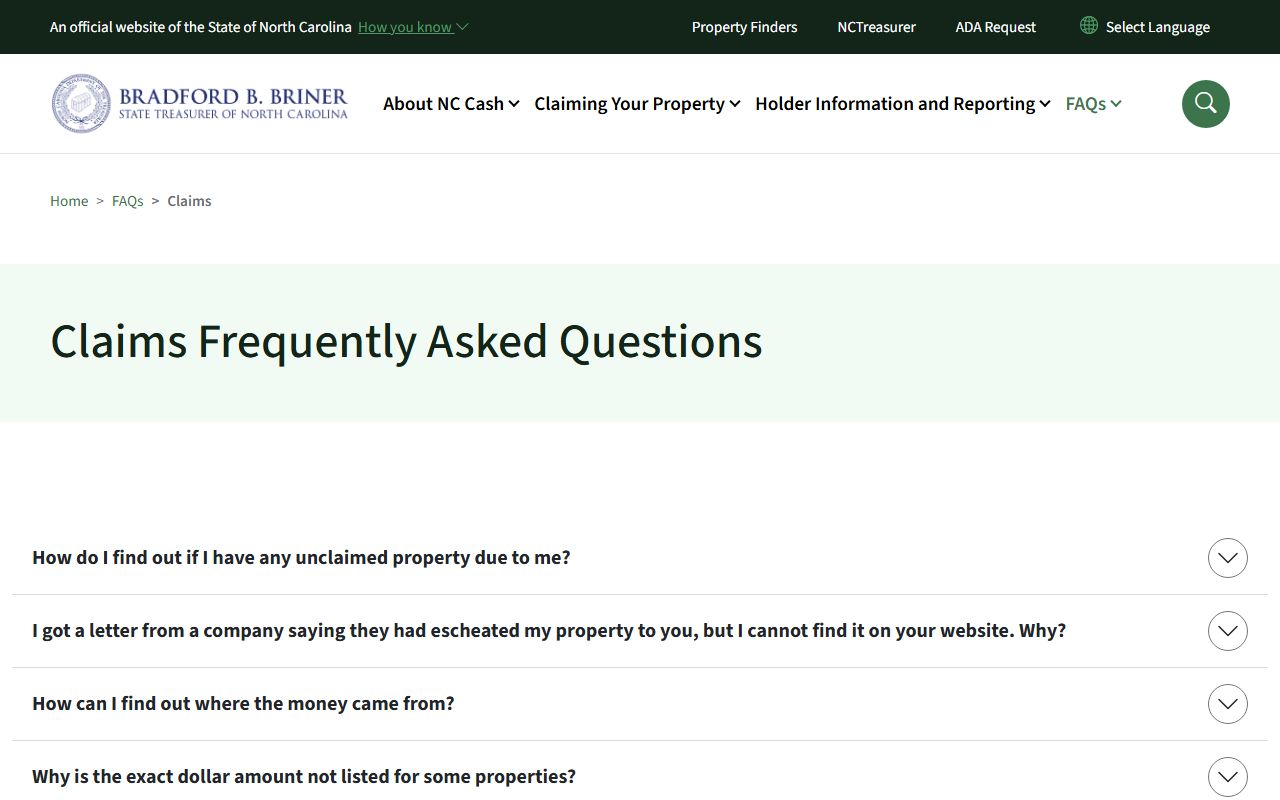
This page answers common questions about what to expect after you submit a claim for unclaimed money in North Carolina. It covers timelines, missing documents, and how to check the status of your claim.
How Unclaimed Money Gets Reported in North Carolina
Businesses and organizations in North Carolina that hold other people's money or property are called "holders." Banks, insurance companies, retailers, and government agencies all qualify as holders of unclaimed funds. When a holder loses contact with an account owner, the clock starts on the dormancy period. After that period passes with no owner activity, the holder must report and turn over the unclaimed money to the NC State Treasurer. The annual reporting deadline is November 1 each year under North Carolina law.
The NC Treasurer's site has a full section on holder responsibilities and reporting rules for unclaimed money in North Carolina.
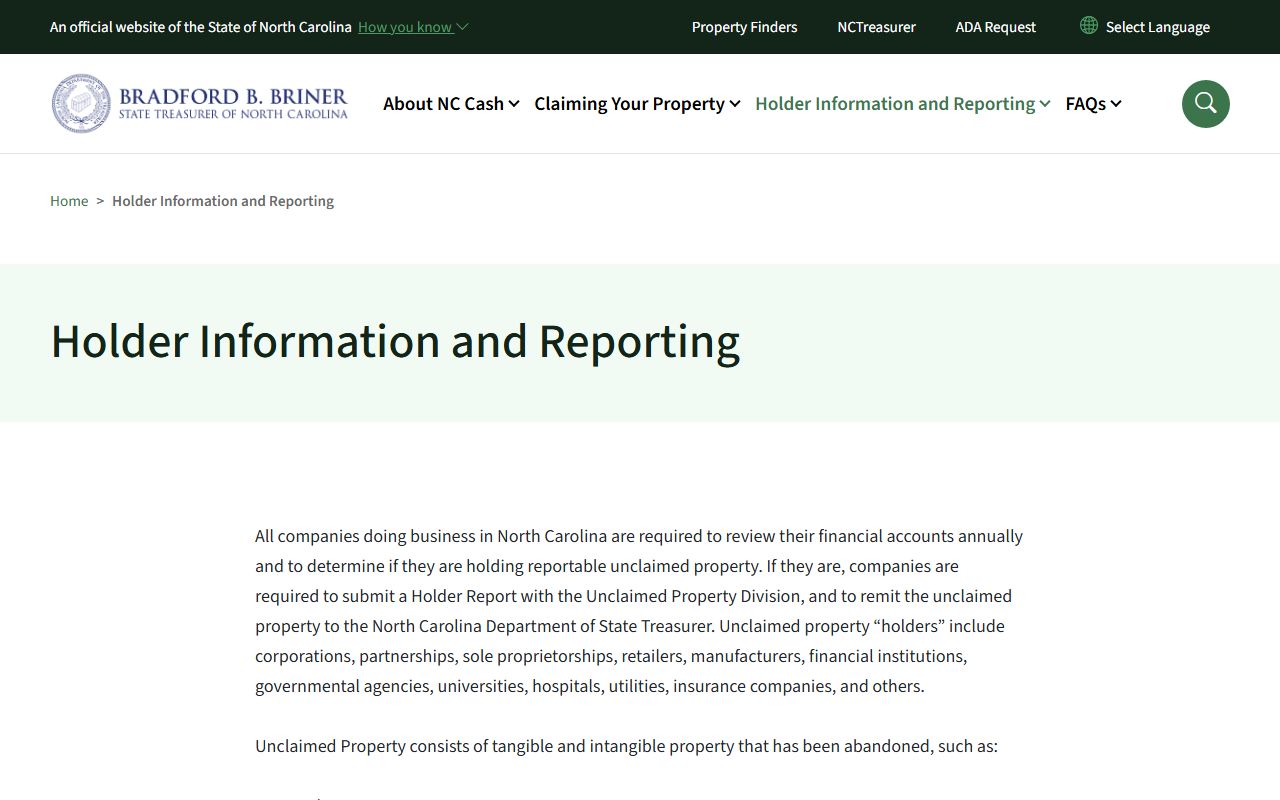
Holders can find forms, due dates, and instructions on the page above. Businesses that fail to report unclaimed money face penalties under N.C. Gen. Stat. 116B-77. The law requires holders to make a good faith effort to reach the owner before turning over the funds. This duty to contact is a key part of North Carolina's unclaimed money process. Holders must send a written notice to the owner's last known address at least 60 days before the reporting deadline.
The holder FAQ page goes deeper into reporting questions for North Carolina unclaimed money.
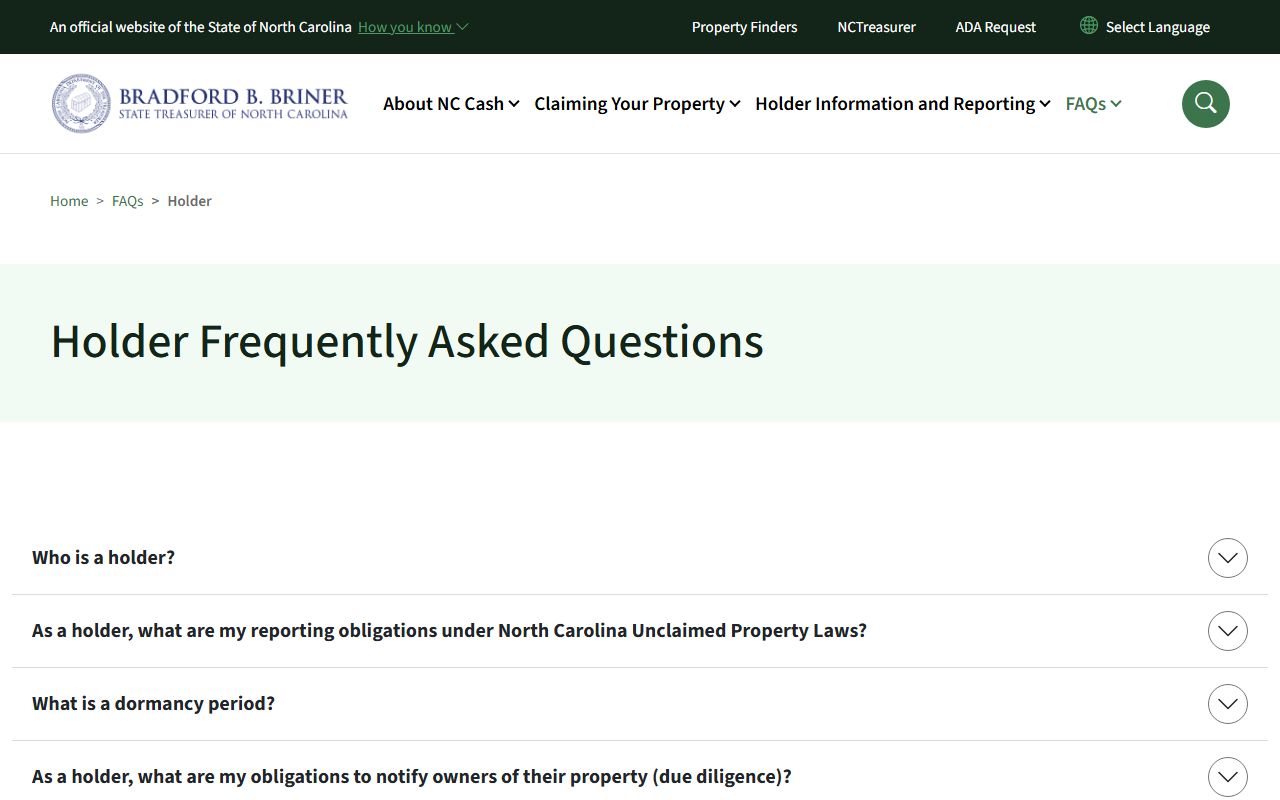
This resource covers filing extensions, electronic reporting, and what to do about small-value items. It is a helpful guide for any business that may be holding unclaimed money owed to someone in North Carolina.
Note: Holders who do not report unclaimed money by the November 1 deadline may face fines and interest charges from the NC State Treasurer.
Unclaimed Money from Foreclosures in North Carolina
When a home sells at a foreclosure auction in North Carolina for more than what was owed, the extra cash is called surplus funds. Those surplus funds belong to the former property owner. Under N.C.G.S. 45-21.31, the person who conducted the sale must file a report of the surplus with the Clerk of Superior Court in the county where the property is located. The clerk holds the unclaimed surplus funds until the rightful property owner files a petition to claim them.
The rules for claiming surplus funds from foreclosures in North Carolina are found in N.C.G.S. 45-21.32. You must file a motion with the Clerk of Superior Court and show that you have a legal right to the unclaimed money. This often requires proof that you owned the property or held a valid lien. The clerk reviews the claim and orders a disbursement if everything checks out. These funds sit at the county level, not with the State Treasurer.
The NC Courts website has information about court services and access for those seeking unclaimed money from foreclosure surplus in North Carolina.
Through the NC Judicial Branch, you can find contact details for the Clerk of Superior Court in each of the 100 counties. That clerk's office is where foreclosure surplus funds sit as unclaimed money in North Carolina.
North Carolina Court Records and Unclaimed Money
The NC eCourts portal lets you look up civil cases across all 100 counties in North Carolina. This tool can help you find foreclosure cases where surplus funds may exist as unclaimed money. Search by party name or case number to locate records tied to properties that sold for more than the debt owed.
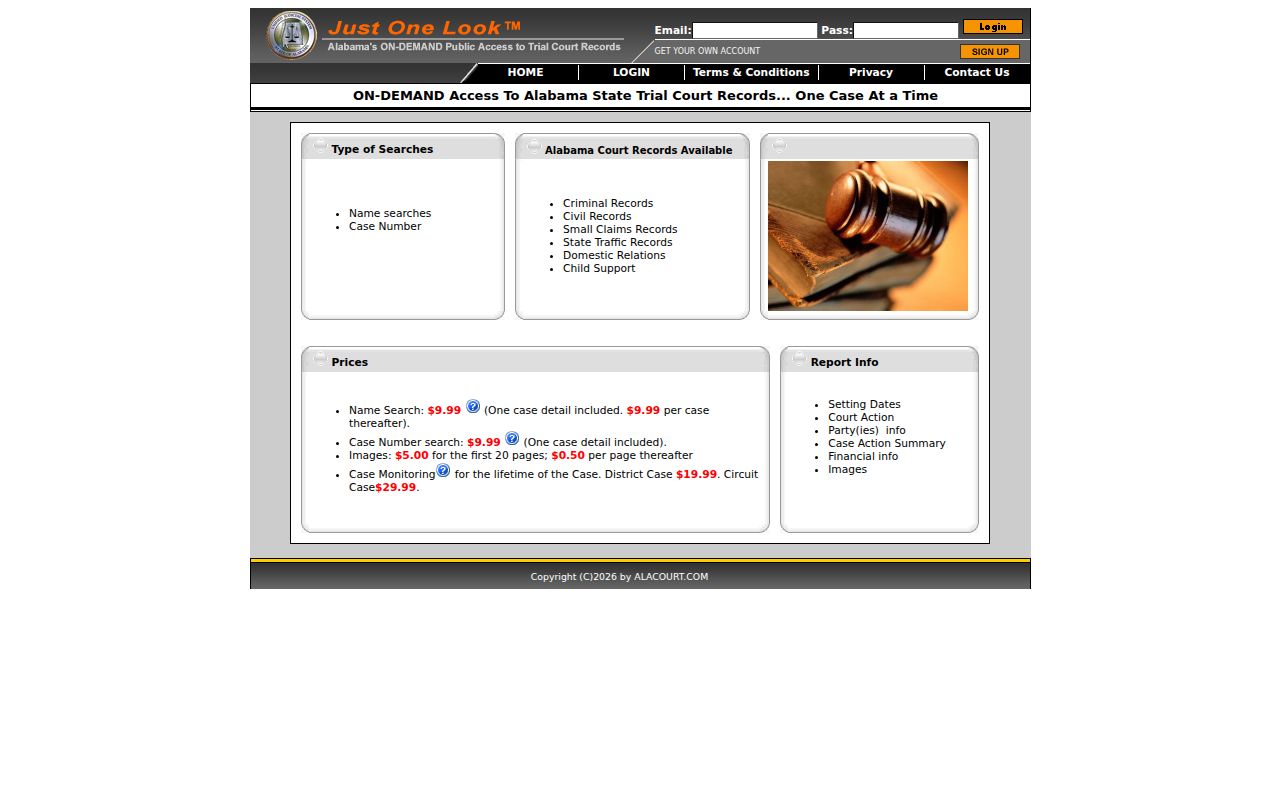
The eCourts system is free to use for basic case lookups. You can see party names, filing dates, and case status at a glance. For full documents, contact the Clerk of Superior Court in the county where the case was filed. If a foreclosure case shows surplus proceeds, that unclaimed money may be waiting for the former owner in North Carolina.
Note: The eCourts portal covers civil, criminal, and estate cases, but foreclosure surplus funds are found only in civil filings in North Carolina.
Searching Beyond North Carolina for Unclaimed Money
If you have lived in other states, your unclaimed money might not be in North Carolina. The National Association of Unclaimed Property Administrators, known as NAUPA, runs MissingMoney.com as a free national search tool. This site connects to 48 state databases and holds over 211 million records. It costs nothing to use and carries no ads. One search can cover most of the country at once.

MissingMoney.com is endorsed by NAUPA and recognized by state treasurers across the country. It is a good second step after searching NCCash.com for North Carolina unclaimed money. Try every name and address you have used. Many people find unclaimed money in states where they went to school, held a past job, or briefly lived. The search takes just a few seconds and may turn up unclaimed funds or property you never knew about.
Protections for Owners of Unclaimed Money in North Carolina
North Carolina law protects people who have unclaimed money from excessive finder fees. Under N.C. Gen. Stat. 116B-78, professional finders who locate unclaimed money and offer to help you claim it may charge no more than $1,000 or 20% of the value, whichever is less. You never have to use a finder service. The search and claim process is free through the state. Anyone can do it on their own by going to NCCash.com or calling the Unclaimed Property Division in North Carolina.
You can reach the NC Unclaimed Property Division about your unclaimed funds by phone at 866-NCCash1 (866-622-2741), Monday through Friday from 8 a.m. to 5 p.m. You can also email unclaimed.property@nctreasurer.com with questions about your unclaimed money. For mail, send your claim documents to PO Box 20431, Raleigh, NC 27619-0431. Staff will help you through each step at no charge in North Carolina.
Tips for Finding Unclaimed Money in North Carolina
A thorough search raises your odds of finding unclaimed money in North Carolina. Many records were entered years ago, and names may be misspelled or shortened. Try different versions of your name. Use your full first name, then try just an initial. Search your maiden name if it applies. Look up family members too, especially older relatives who may not use the internet. Deceased relatives can also have unclaimed money waiting in North Carolina.
Here are steps to get the best results when searching for unclaimed money in North Carolina:
- Search NCCash.com with your full legal name first
- Try past names, nicknames, and common misspellings
- Search for parents, grandparents, and other family members
- Check MissingMoney.com for funds held in other states
- Come back weekly since the North Carolina database updates often
The NC Treasurer's unclaimed property page has more details on what to expect during the search and claim process in North Carolina.
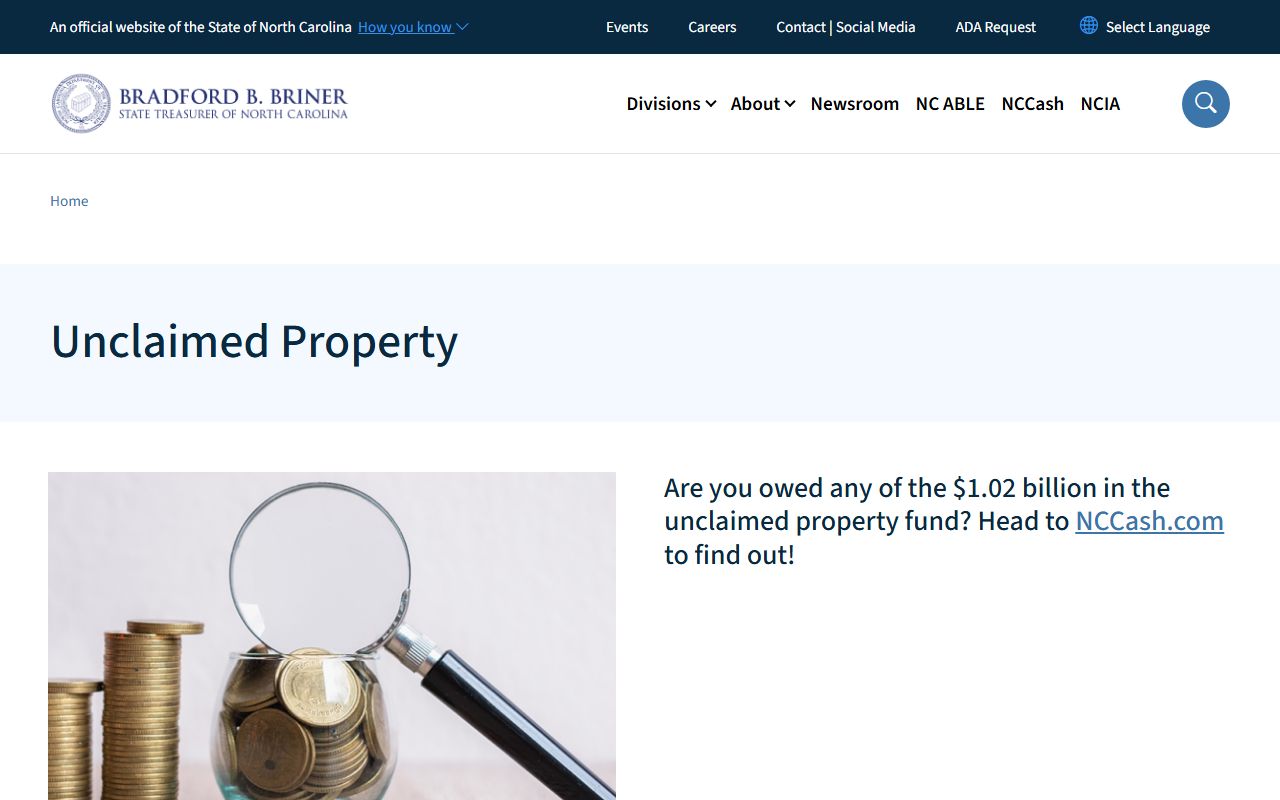
This official page from the NC State Treasurer covers the full scope of the unclaimed money and unclaimed property program in North Carolina. It includes links to search tools, claim forms, and contact details. Bookmark it so you can check back as the database grows with new unclaimed funds from across the state.
Note: There is no time limit to claim unclaimed money in North Carolina, so funds from decades ago may still be waiting for you.
Browse North Carolina Unclaimed Money by County
Each county in North Carolina may have unclaimed money records tied to its residents. Pick a county below to search for unclaimed money in that area.
Unclaimed Money in Major North Carolina Cities
Residents of cities across North Carolina may have unclaimed money waiting. Pick a city below to find local unclaimed money resources.