
Wake County Lost Money Search
Wake County is the second most populated county in North Carolina, home to over 1.1 million people. Raleigh, the state capital and county seat, anchors a region with massive economic output. That activity creates a large pool of unclaimed money held by the State Treasurer. Bank accounts, insurance payouts, old paychecks, and court surplus tied to Wake County addresses sit waiting for their owners. Searching is free and fast. Enter your name in the state database to see if Wake County has unclaimed money for you.
Wake County Quick Facts
Wake County Unclaimed Money Overview
Wake County was formed in 1771 from parts of Orange and Johnston counties. It was named for Margaret Wake Tryon, wife of colonial governor William Tryon. Raleigh has served as the North Carolina state capital since 1792. Today, Wake County is a hub for tech, healthcare, education, and state government. The Research Triangle region draws workers and companies from across the country. That constant growth means a steady stream of new financial records and, in turn, unclaimed money.
The North Carolina State Treasurer holds all unclaimed funds reported by businesses and institutions statewide. Wake County's size means it contributes one of the largest shares. Old bank accounts from major and community banks go dormant. Insurance claim checks go uncashed. Payroll checks sit idle after workers move on to new jobs. Corporate dividends pile up when shareholders lose touch. All of it flows to the state after the dormancy period ends.
Wake County's rapid growth adds a unique factor. People move in and out of the area at a high rate. Each move creates a chance for mail to go astray and accounts to fall off the radar. A refund check sent to a prior Raleigh address may never reach you. That check becomes unclaimed money after it goes stale. With over 1.1 million residents and a booming economy, Wake County likely holds one of the highest concentrations of unclaimed funds in North Carolina.
Surplus Funds at the Wake County Clerk
The Wake County Clerk of Superior Court processes a high volume of foreclosure sales, estate filings, and civil judgments each year. Foreclosure surplus is a major source of unclaimed money in Wake County. When a property sells at auction for more than the outstanding debt, the Clerk holds the excess. Prior owners and lien holders can petition the court to claim it.
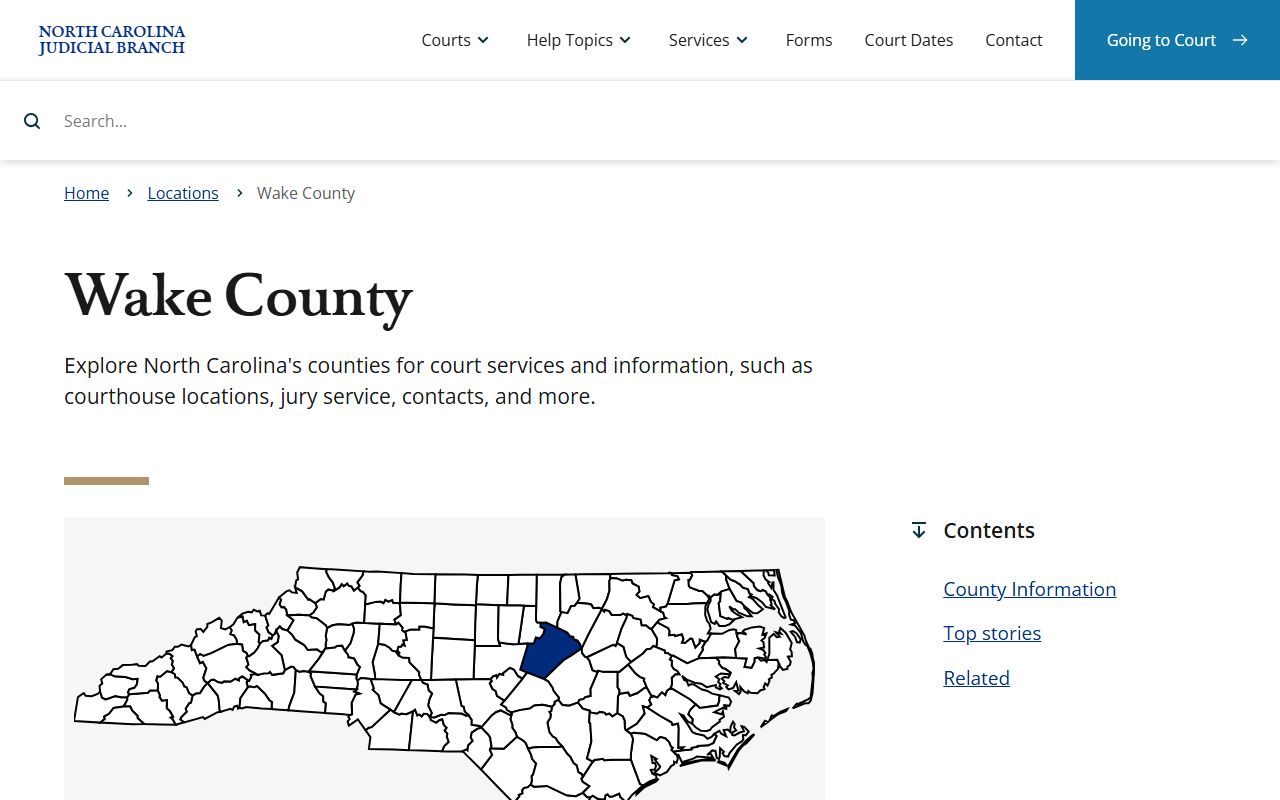
The Wake County Clerk of Superior Court page on the NC Courts website is shown below.
Raleigh's strong real estate market means foreclosure surplus amounts can be significant. Homes that sell well above the loan balance produce large surplus pools. Even smaller residential properties can yield hundreds or thousands of dollars in surplus. If you lost a home to foreclosure in Wake County, check with the Clerk's office. After about one year, unclaimed surplus transfers to the State Treasurer and can be found at NCCash.com.
Estate money also passes through the Wake County Clerk. When a person dies without known heirs, funds from the estate may sit unclaimed. Heirs who surface later can still file a claim. The Clerk handles probate for Wake County estates and manages the distribution of assets under court supervision.
Note: Wake County's high volume of court filings means new surplus records appear frequently. Check the state database on a regular basis to catch recent Wake County listings.
Wake County Tax and Property Records
The Wake County Tax Department manages property tax billing, collection, and foreclosure. Online tools let residents search tax bills and make payments. Overpaid property taxes or uncollected refund credits can become unclaimed money when the owner does not respond to notices.
The Wake County government website is shown below.

The Wake County Register of Deeds records deeds, surveys, plats, maps, and nuptial agreements. These records help verify ownership for unclaimed money claims. If you need to prove a past address or property interest in Wake County, the Register of Deeds is a key resource. Documents filed there can support your claim when you petition the Clerk or file with the State Treasurer.
Foreclosure information is also available through the Tax Department. If a tax lien sale produces surplus, the process works much like a mortgage foreclosure. The excess goes to the prior owner. Wake County's large tax base means these situations occur more often than in smaller counties.
How to Find Unclaimed Money
Visit the NCCash claim search page and type your name. The system scans all records tied to North Carolina addresses. Also search MissingMoney.com for funds from other states. Many Wake County residents moved here from elsewhere, so multi-state searches make sense.
To claim your funds, prepare these items:
- Government-issued photo ID
- Social Security number proof
- Current address verification
- Documents linking you to the unclaimed property
- Heir paperwork if the original owner is deceased
Claims of $5,000 or less may go through the NCCash Match program. This tool verifies your identity and can process payment with no extra forms. The entire process is free. North Carolina charges no fees to search or claim unclaimed money.
Dormancy Periods for Wake County
Under N.C. Gen. Stat. Chapter 116B, dormancy periods vary. Most bank accounts and checks go dormant after five years with no owner contact. Utility deposits become dormant after one year. Securities follow a three-year timeline. Once dormant, the holder must report and transfer the funds to the State Treasurer.
Wake County's economy generates new unclaimed money on every reporting cycle. Tech firms, hospitals, universities, and government agencies all hold accounts that go dormant over time. Corporate dividends, vendor payments, and retirement distributions rank among the most common types. The sheer volume of business in Wake County means the unclaimed money pool grows each year. Search the database often to catch new records as they appear.
Wake County Heir Claims
Heirs can recover unclaimed money from a deceased relative's accounts. You need the original owner's death certificate and proof of your relationship. Birth certificates, marriage licenses, and court orders all work. If the estate went through probate in Wake County, letters testamentary or letters of administration confirm your authority to claim.
Without a will, North Carolina intestacy law sets the order of heirs. Spouses come first. Then children. Then parents. The rules are the same across all counties. Legal Aid of North Carolina provides free help to qualifying residents who need assistance with estate claims or court filings.
Note: Wake County processes a high volume of heir claims due to its large population. Filing early and gathering all documents in advance can speed up the process.
Nearby Counties
Wake County borders several counties in the Triangle region. Search each one if you have lived nearby. Unclaimed money is tied to the address on file, not your current location.