
Caldwell County Unclaimed Money Search
Caldwell County may owe you money. The state of North Carolina holds funds from old bank accounts, uncashed checks, and forgotten insurance policies tied to Lenoir, Granite Falls, and other Caldwell County addresses. About one in seven people across the state have unclaimed property in their name. Many do not know it exists. The search is completely free and takes just a few minutes on the official state website. You can check your name and the names of family members right now. Start your search to find out if Caldwell County has unclaimed money waiting for you.
Caldwell County Quick Facts
Caldwell County Unclaimed Money and Local History
Caldwell County was formed in 1841 from parts of Burke and Wilkes counties. It was named for Joseph Caldwell, the first president of the University of North Carolina. The county seat is Lenoir, nestled in the western foothills of the state. For decades, Caldwell County was a center of furniture manufacturing. Bernhardt Furniture started here in 1889 and grew into a major employer.
That manufacturing legacy left behind a trail of unclaimed money. When factories closed or downsized, final paychecks went uncollected. Vendor accounts were abandoned. Retirement fund distributions sat uncashed. All of these turn into unclaimed property under N.C. Gen. Stat. § 116B-53 once the dormancy period passes. The North Carolina State Treasurer then holds the funds as custodian.
Today, North Carolina holds over $1.02 billion in unclaimed property. Caldwell County residents make up part of that total. The state returned $115 million last fiscal year to rightful owners across all counties.
Note: Unclaimed property from closed businesses is common in Caldwell County due to its long manufacturing history.
Surplus Funds at Caldwell County Clerk
Foreclosure sales sometimes produce surplus funds in Caldwell County. When a home sells for more than the debt owed, the Clerk of Superior Court holds the excess. Former homeowners, heirs, and junior lienholders may petition for this surplus under N.C. Gen. Stat. § 45-21.31.
The Caldwell County Clerk of Superior Court page on the NC Courts website is shown below.
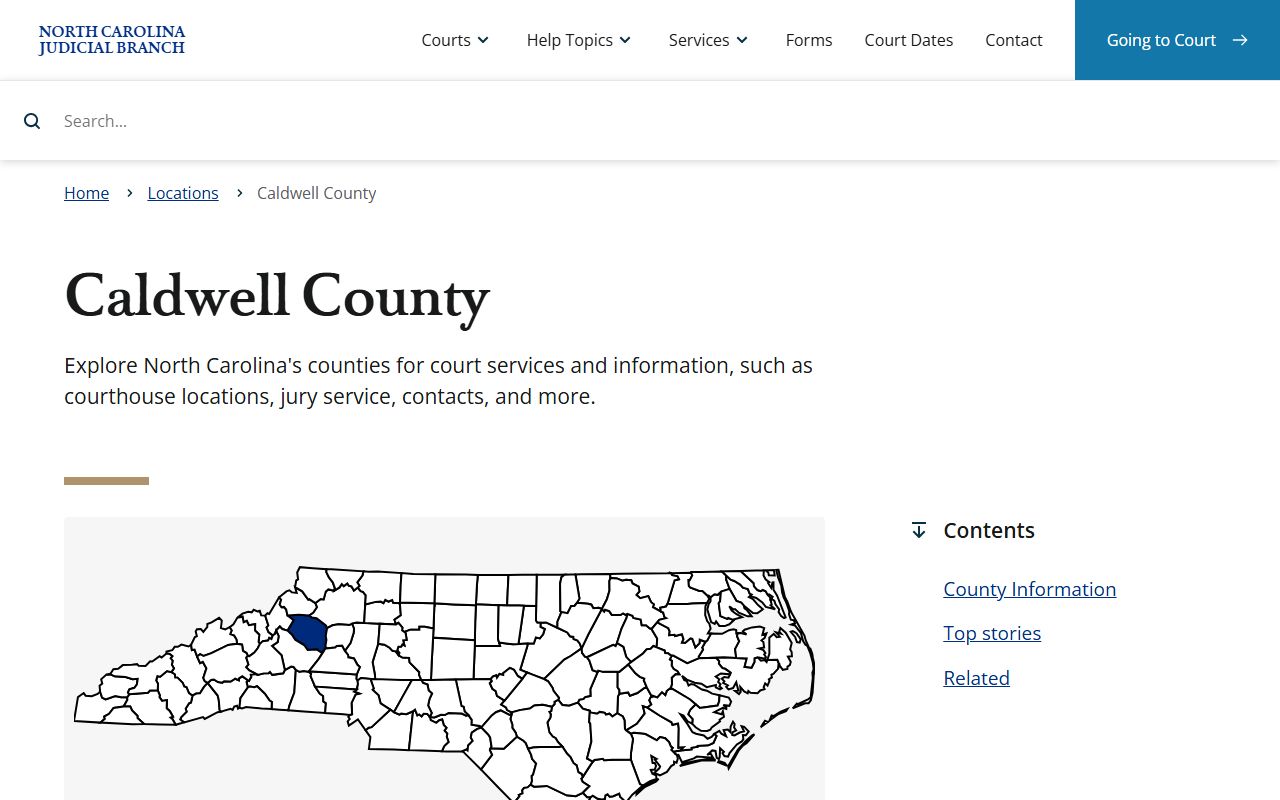
Caldwell County properties range from modest homes in Lenoir to rural mountain land. Foreclosure sales here can generate surplus in varying amounts. The key is to act promptly. After about one year of sitting unclaimed, surplus funds transfer from the Clerk to the State Treasurer under Chapter 116B. At that point, you would search for the money through NCCash.com rather than the local court.
How to Claim Unclaimed Money in Caldwell
Go to the NCCash claim search page and type your name. The database returns any matches in seconds. You can also try MissingMoney.com to search all states at once. Both sites are free.
To complete a claim, you will need these documents:
- A valid photo ID
- Proof of your Social Security number
- Current address verification
- Any records linking you to the unclaimed property
- Death certificate and heir proof if claiming for a deceased relative
Small claims of $5,000 or less may qualify for the NCCash Match program. The state automatically sends a check when your information matches their records. No forms or paperwork needed. Larger claims require a review by the Treasurer's office. The process under N.C. Gen. Stat. § 116B-67 ensures each claim is verified before funds are released.
Dormancy Rules for Caldwell County Funds
Different types of unclaimed money follow different timelines. Utility deposit refunds become dormant after just one year. That is the shortest period. Securities like stocks and bonds go dormant after three years. Most other property types, including bank accounts and uncashed checks, reach dormancy at the five-year mark.
These dormancy periods come from N.C. Gen. Stat. § 116B-53. Once the period passes with no owner contact, the holder must report the property and send the funds to the Treasurer. The Treasurer then holds the money under N.C. Gen. Stat. § 116B-52 until someone files a valid claim. There is no deadline. Your money does not expire.
Caldwell County's economy has shifted over the years from heavy manufacturing to a more mixed base. That transition means old accounts from closed factories sit alongside newer accounts from current businesses. Both types end up in the unclaimed property system when dormancy periods pass.
Estate Claims in Caldwell County
Family members of deceased Caldwell County residents can claim unclaimed funds. The money does not vanish when the owner dies. Heirs have a legal right to file a claim. You will need a death certificate, proof of relationship, and any estate documents from probate.
If the estate went through probate in Caldwell County, the Clerk of Superior Court has the records. Letters testamentary or letters of administration prove you can act on behalf of the estate. Without a will, North Carolina intestacy law determines the rightful heirs. Legal Aid of North Carolina can help residents who need guidance at no charge.
Note: Always search under the deceased person's name when looking for unclaimed money in Caldwell County.
Caldwell County Unclaimed Money Protections
You never need to pay anyone to search for unclaimed money. The state provides free tools. Some third-party finders offer to locate your funds for a fee. While legal, their services are not necessary. Under N.C. Gen. Stat. § 116B-78, finder fees cannot exceed $1,000 or 20 percent of the claim value.
The Treasurer's office helps Caldwell County residents at no cost. Call 866-NCCash1 (866-622-2741) for questions. You can also mail claims to PO Box 20431, Raleigh, NC 27619-0431. The process is simple and designed for anyone to complete on their own.
Nearby Counties
Caldwell County borders several other counties in western North Carolina. Search each one if you have lived or worked nearby. Funds follow the address on record at the time.