
Unclaimed Money in Cleveland County
Cleveland County has a population of about 100,000 people, and many of them have unclaimed money sitting in state records. Shelby, Kings Mountain, and nearby towns all contribute to the pool of lost funds. Old bank accounts, insurance payments, court surplus, and forgotten refunds are common sources. North Carolina tracks all unclaimed property through the NCCash program. Searching is free and only takes a few minutes. You just need your name to check. Start now and see if Cleveland County holds lost money that belongs to you or your family.
Cleveland County Quick Facts
Cleveland County Unclaimed Money Sources
Unclaimed money in Cleveland County starts with dormant accounts. A bank account that sits untouched for five years becomes unclaimed property. The bank reports it to the North Carolina State Treasurer. Insurance checks that go uncashed follow the same path. So do old stock dividends, utility refunds, and payroll checks.
Cleveland County was formed in 1841 from parts of Lincoln and Rutherford counties. The county is named for Benjamin Cleveland, a hero of the Battle of Kings Mountain during the American Revolution. Today the county has a strong economy built on manufacturing, healthcare, and education. Cleveland Community College and Gardner-Webb University bring in students, staff, and associated accounts. The Earl Scruggs Center in Shelby honors the county's bluegrass heritage.
With 100,000 residents and a diverse economy, Cleveland County generates a steady stream of unclaimed property each year. People change jobs, move away, or simply forget about old accounts. Every one of those forgotten accounts is a potential unclaimed fund. The state holds the money until someone claims it. There is no time limit.
Note: North Carolina never charges a fee to search for or claim your unclaimed money.
Cleveland County Surplus Funds Process
The Clerk of Superior Court in Cleveland County holds surplus funds from foreclosure sales. When a property sells at auction and the price exceeds the debt, the extra money goes to the Clerk. Former owners and other parties with a legal interest can petition for these funds.
Filing for surplus funds in Cleveland County requires several steps. You must submit a petition to the Clerk. Bring a valid photo ID, proof of your connection to the property, and details about the foreclosure sale. The Clerk schedules a Special Proceedings hearing. Other claimants get notice of the hearing. If the Clerk approves your petition, you receive the surplus.
The Cleveland County Clerk of Superior Court page is shown below on the NC Courts website.
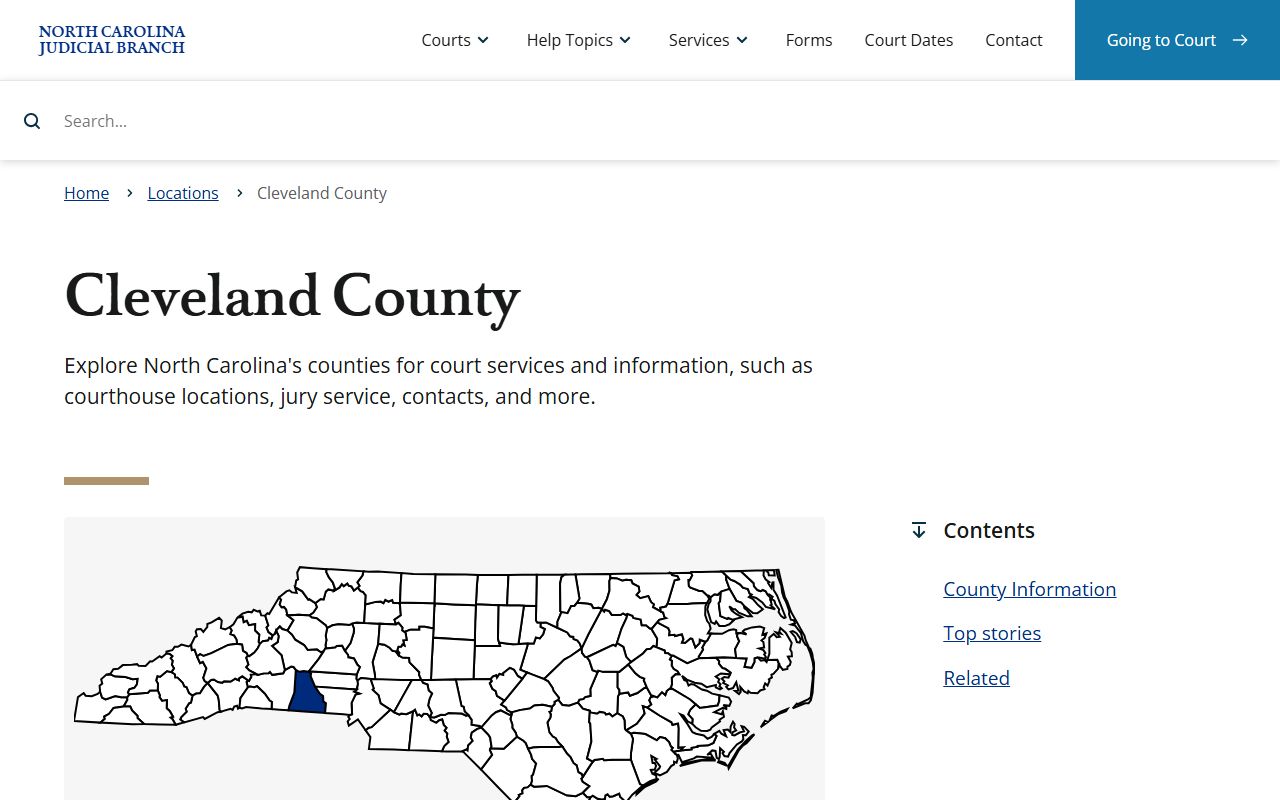
Cleveland County also provides GIS and online public records tools. These can help you research property details when building a surplus fund claim. Knowing the exact parcel, sale date, and case number makes your petition stronger.
Cleveland County Government Resources
The Cleveland County government website is a useful starting point for records research. The site provides links to property tax data, GIS maps, and county department contacts. If you are building a surplus fund claim, these resources can supply the evidence you need.
The Cleveland County government homepage is shown below.
The Register of Deeds office keeps records of deeds, mortgages, and deeds of trust. Certified copies from this office prove past ownership. You may need these documents when petitioning the Clerk for surplus funds from a foreclosure sale in Cleveland County.
Under Chapter 116B of the General Statutes, surplus funds that remain unclaimed for about one year move from the Clerk to the State Treasurer. At that point, you file your claim through the state unclaimed property program at NCCash.com.
How to Find Unclaimed Money in Cleveland
Visit the NCCash claim search page and type your name. Results appear in seconds. Each result shows the type of property, the amount range, and the holder who reported it. Click on any match to start your claim.
For a wider search, use MissingMoney.com. It covers all states. If you moved to Cleveland County from South Carolina or another border state, this tool can find funds you left behind.
Items you may need when filing a claim:
- Photo ID such as a driver's license
- Proof of address matching the record
- Social Security number
- Old account statements or receipts
- Death certificate if claiming for a relative
Simple claims for small amounts get approved fast. Larger claims and estate claims may take weeks or months. The state reviews each one carefully. Respond quickly to any requests for more documents.
Cleveland County Estate Unclaimed Funds
When someone dies with unclaimed money in their name, heirs can step in. North Carolina allows estate representatives, spouses, children, and other heirs to file claims. The money does not disappear. It stays in state custody until someone with the right to it comes forward.
Estate claims in Cleveland County follow the same process as elsewhere in the state. You need a death certificate, proof of kinship, and estate documents if probate took place. If there was no will, intestacy rules apply. The Cleveland County court can help locate probate records. Legal Aid of North Carolina assists those who cannot afford legal help.
Note: Search under the deceased person's name, not your own, when looking for unclaimed property tied to a family member in Cleveland County.
NCCash Match and Cleveland County
The state runs an automatic payment program called NCCash Match. If it matches your name and address to unclaimed funds worth $5,000 or less, a check arrives in the mail. No forms needed. Cleveland County residents have received these checks without ever searching.
Keep your address current to benefit from this program. For claims over $5,000, you file through NCCash.com. You can also call 866-NCCash1 (866-622-2741) or mail your claim to PO Box 20431, Raleigh, NC 27619-0431. Watch out for third-party finders. State law caps their fees at $1,000 or 20%. You never need to pay anyone to search or file.
Nearby Counties
Cleveland County borders several other counties. If you have ties to any of these areas, search them too. Unclaimed money is linked to the address on record, not your current home.