
Columbus County Unclaimed Funds
Columbus County in southern North Carolina holds unclaimed money for many of its residents. People in Whiteville, Tabor City, Fair Bluff, and other towns may have lost funds sitting in state records. These include old bank accounts, insurance payouts, court surplus, and utility refunds. The NCCash program tracks all of it. Columbus County is the third largest county in North Carolina by land area, with roughly 50,000 residents spread across a wide region. A free search takes just minutes. Check your name today to see if Columbus County has unclaimed money waiting for you.
Columbus County Quick Facts
How Unclaimed Money Grows in Columbus County
Unclaimed money starts with forgotten accounts. Someone opens a bank account, then moves or stops using it. After five years of no contact, the bank must send those funds to the North Carolina State Treasurer. The same rule applies to insurance proceeds, stock dividends, and old refund checks. Utility deposits go dormant after just one year. Securities become dormant at three years.
Columbus County was formed in 1808 from Bladen and Brunswick counties. Named for Christopher Columbus, it covers a vast area of southern North Carolina. Agriculture is a major force here. Peanuts, soybeans, and corn are top crops. Timber and lumber also play a big role. All of these industries create business accounts, vendor deposits, and payments that sometimes go unclaimed.
The county's large land area means residents are spread out. Mail gets lost. People move between rural routes. Checks go to old addresses. All of these factors push up the amount of unclaimed money tied to Columbus County.
Columbus County Clerk and Surplus Money
The Clerk of Superior Court in Columbus County manages surplus funds from foreclosure sales. When a property sells for more than what the owner owed, the difference is surplus. The Clerk holds this money. If you lost a home to foreclosure in Columbus County and the sale brought in more than your debt, you may be owed surplus funds.
To file for surplus, you petition the Clerk. Bring your photo ID, proof of your interest in the property, and the foreclosure case details. The Clerk then schedules a hearing. Other parties with potential claims get notice. If the Clerk rules in your favor, you get the money.
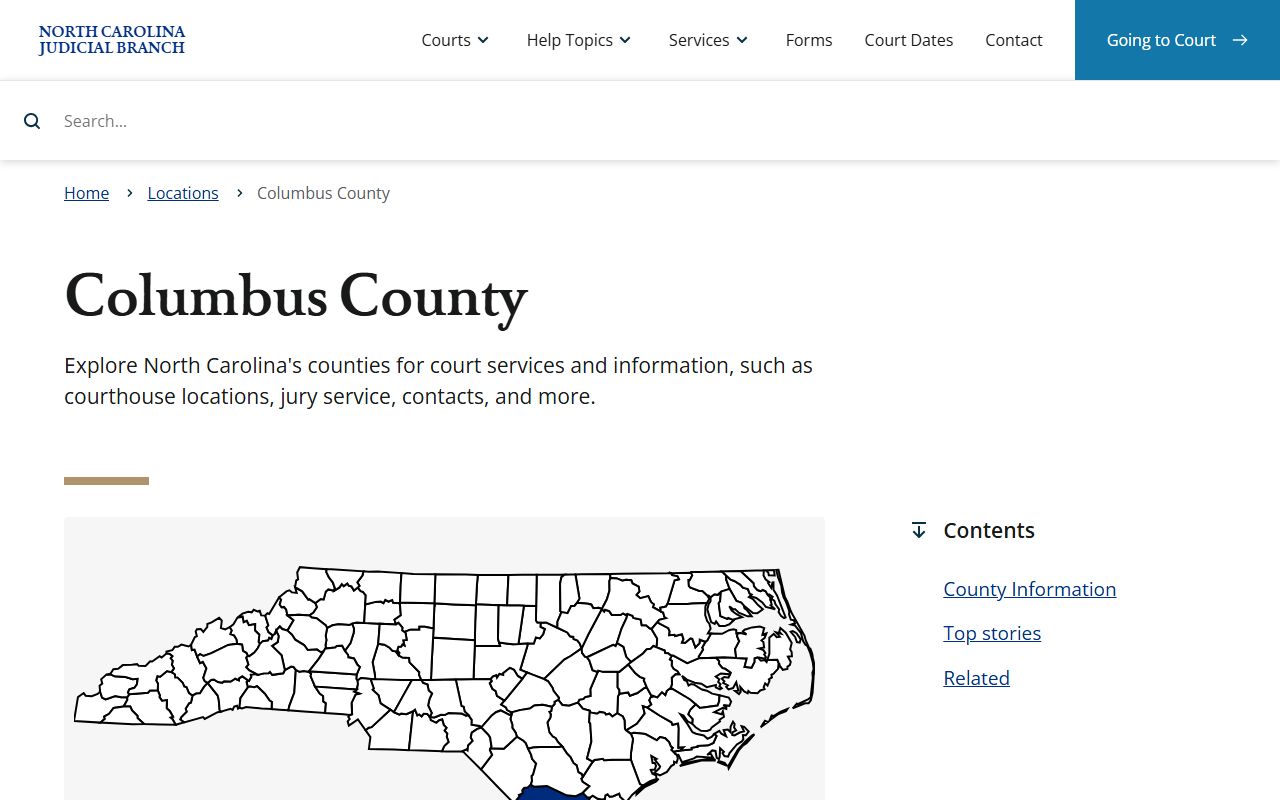
The Columbus County Clerk of Superior Court page is shown below on the NC Courts website.
Under Chapter 116B, surplus funds that no one claims within about one year transfer to the State Treasurer. You can still claim them after that transfer. The process just shifts from the local court to the state unclaimed property office.
Note: Act quickly on surplus fund claims in Columbus County, because the transfer to the state adds steps to the process.
Columbus County Property Records
The Columbus County government website offers access to local records and services. Property tax records, deed information, and county department contacts can all support an unclaimed money claim. If you need to prove past ownership for a surplus funds petition, start here.
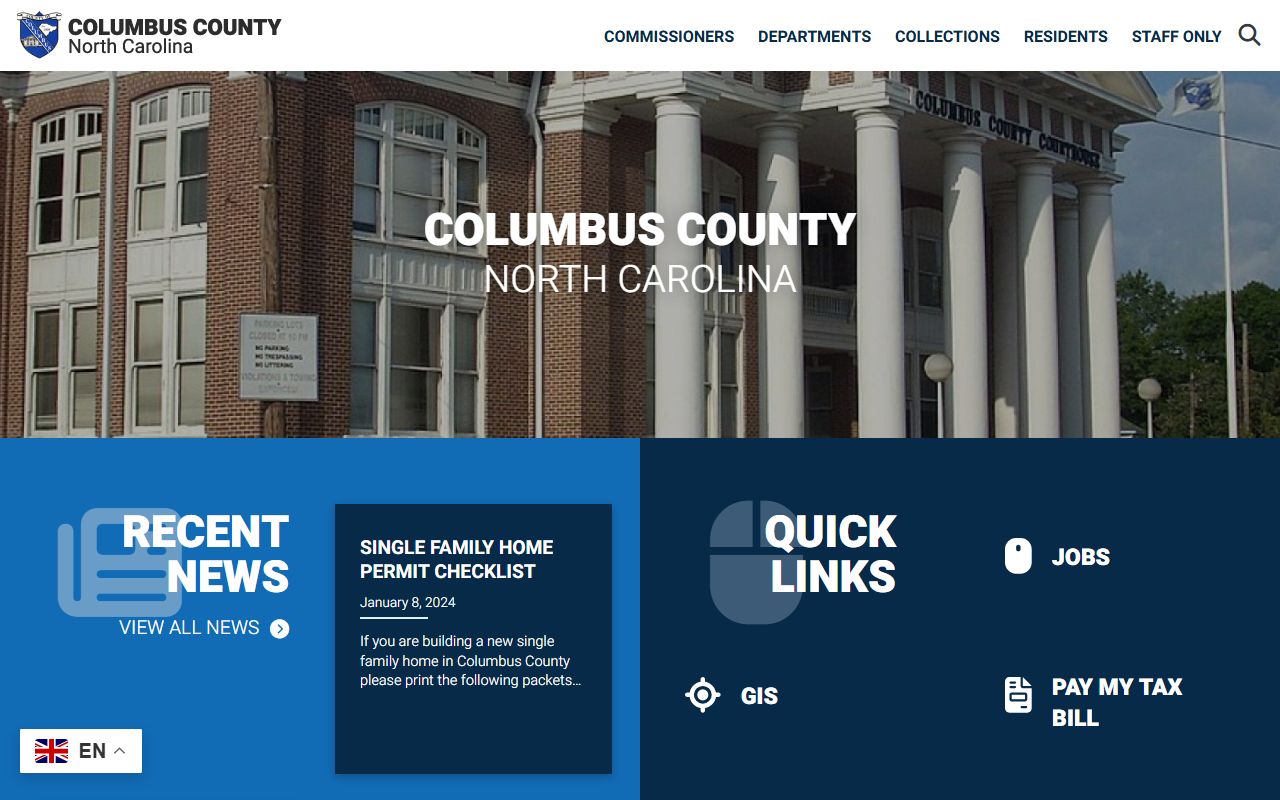
The Columbus County government homepage is shown below.
The Register of Deeds keeps records of all property transactions in Columbus County. Deeds, mortgages, and deeds of trust are all on file. Certified copies from this office serve as proof when you petition for surplus funds. The Tax Office handles property valuations and tax bills. If a tax foreclosure resulted in surplus, the Tax Office records help trace the funds.
Searching for Lost Money in Columbus
The search is simple. Go to the NCCash claim search page. Type your name. The database shows matches. Click any match to begin the claim process. You can also check MissingMoney.com for a multi-state search. Columbus County sits near the South Carolina border, so cross-state searches make sense here.
Most claims need basic proof of identity. A driver's license and Social Security number cover most cases. For estate claims, add a death certificate and proof of your relationship to the deceased. Larger claims may need extra documents. The Treasurer's office will tell you exactly what they need.
Columbus County residents have claimed thousands of dollars through this process. The money is free to search and free to claim. No one should charge you for this. North Carolina caps finder fees at $1,000 or 20% of the claim value. You can handle it all on your own at NCCash.com.
Note: Search under maiden names, former married names, and nicknames to catch every possible match in Columbus County.
Heir Claims in Columbus County
Unclaimed money outlasts its original owner. Heirs and estate representatives can file claims at any time. North Carolina puts no deadline on these claims. The money stays safe in state custody until the rightful heir steps forward.
For heir claims, gather a death certificate, proof of kinship, and any probate documents. If the estate went through the Columbus County courts, the Clerk has those records. Without a will, state intestacy law determines who can claim. Legal Aid of North Carolina provides free guidance to qualifying residents who need help navigating estate claims.
Columbus County has deep roots. Families here go back generations. That means more names to search and more potential unclaimed funds to find. Take the time to check every family member, living or deceased.
Automatic Payments for Columbus County
NCCash Match is an automatic refund program. The state matches names and addresses to unclaimed property records. If it finds a match and the amount is $5,000 or less, a check goes out. No form needed. Columbus County residents have received these payments without ever searching.
Keep your address current with the state. That way, the NCCash Match program can find you. For claims over $5,000, file through NCCash.com or call 866-NCCash1 (866-622-2741). Mailing address for claims: PO Box 20431, Raleigh, NC 27619-0431.
Nearby Counties
Columbus County shares borders with several other counties. If you have lived in any of these areas, check for unclaimed money there too. Records are tied to the address on file.