
Lenoir County Unclaimed Money Search
Lenoir County has unclaimed money waiting for its rightful owners. The North Carolina State Treasurer holds lost funds from bank accounts, insurance payments, utility refunds, and foreclosure surplus tied to Lenoir County addresses. Around 55,000 people live here, and many have never checked the state database. Searching costs nothing. You only need your name. Results show up in seconds. Take a moment to search now and find out if Lenoir County unclaimed money belongs to you.
Lenoir County Quick Facts
Lenoir County Unclaimed Money Overview
Lenoir County was formed in 1791 and named for William Lenoir, a general in the Revolutionary War. The county seat is Kinston. Agriculture built the local economy, with tobacco playing a central role for generations. Manufacturing and healthcare now anchor the job market. All of these industries create financial records. Some of those records turn into unclaimed money when owners lose contact with holders.
The North Carolina State Treasurer manages over $1.02 billion in unclaimed property statewide. Lenoir County's share comes from forgotten bank accounts, life insurance payouts, old payroll checks, and more. Under N.C. Gen. Stat. § 116B-53, when a holder loses contact with a property owner for a set number of years, the property is considered dormant. The holder then reports it to the state.
Lenoir County falls within Judicial District 9A for court matters. Court-held funds, including surplus from foreclosure sales and civil judgments, also become unclaimed money if no one claims them. The Clerk of Superior Court manages these funds at the local level before they transfer to the state.
Note: Lenoir County's economy has shifted over the decades, and each change leaves behind unclaimed money from businesses that closed or people who moved away.
Lenoir County Foreclosure Surplus
Lenoir County handles foreclosure surplus through a detailed process. After a foreclosure sale, the trustee applies the proceeds to expenses, taxes, and the debt. Any remainder goes to the Clerk of Superior Court under N.C. Gen. Stat. § 45-21.31. This surplus belongs to the former owner or other parties with a legal interest in the property.
To claim surplus in Lenoir County, you file a motion or petition in the existing foreclosure proceeding. Your filing should include proof of ownership, documents from the foreclosure, and any lien releases. The Clerk then schedules a hearing, typically within a few weeks. Parties with standing to claim include the former owner, executors, heirs, and junior lienholders.
The Lenoir County Clerk of Superior Court page on the NC Courts website is shown below.
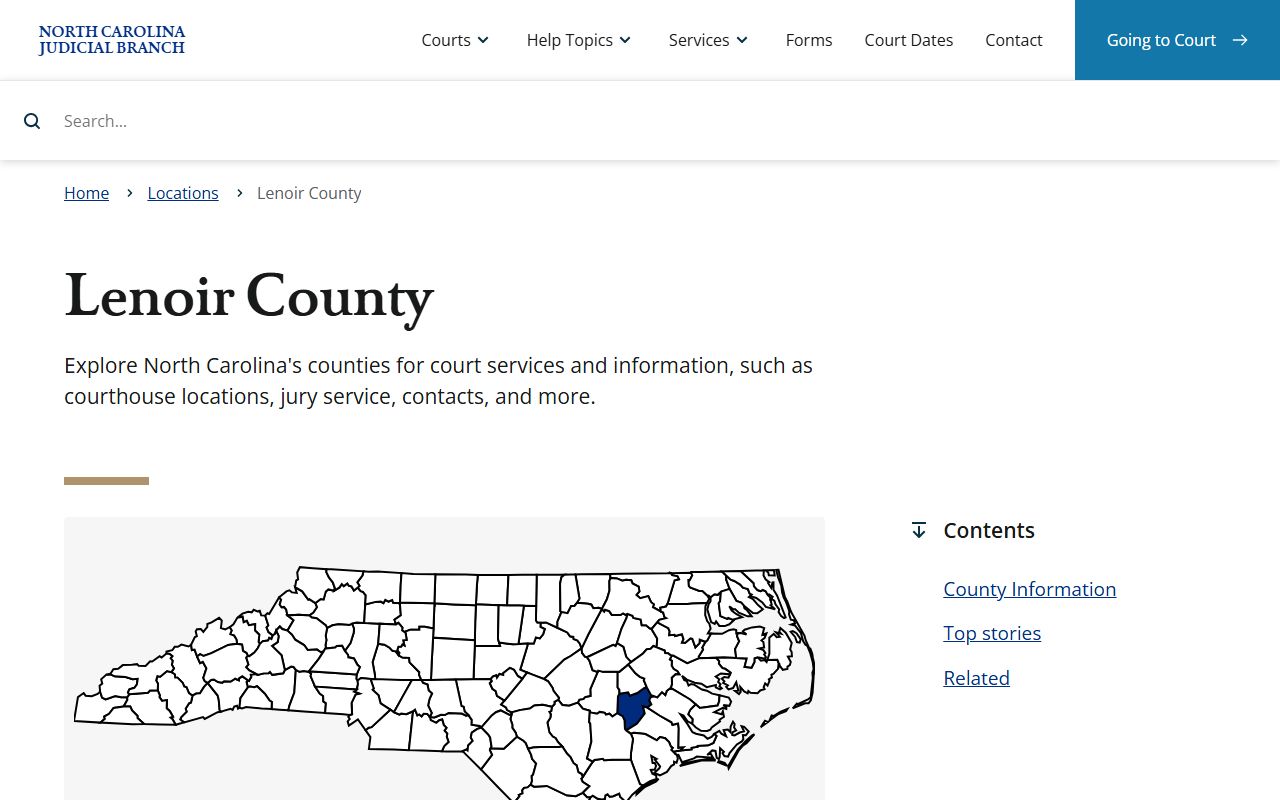
The Trial Court Coordinator for Lenoir County is Amy C. Scott, reachable at (252) 520-5425. Mail goes to PO Box 68, Kinston, NC 28502. If you believe surplus funds exist from a Lenoir County foreclosure, contact the Clerk's office first. After about one year, unclaimed surplus transfers to the State Treasurer, and you would search at NCCash.com instead.
How to Search Lenoir County Records
Start your search at the NCCash claim search page. Enter your first and last name. The system scans all records tied to North Carolina. For a wider search, also check MissingMoney.com.
When you locate a match, the state asks for these items to process your claim:
- Government-issued photo ID
- Social Security number verification
- Current address documentation
- Proof of connection to the unclaimed property
- Death certificate and heir proof if the owner is deceased
The NCCash Match program handles claims of $5,000 or less quickly. If the system can verify your identity against its records, you may not need to submit any paperwork at all. This is especially helpful for Lenoir County residents who find smaller unclaimed amounts. The search and claim process is always free.
Unclaimed Money Types in Lenoir County
Bank accounts make up the largest share of unclaimed money in most North Carolina counties, and Lenoir County is no different. Savings accounts, checking accounts, and certificates of deposit all go dormant when the owner stops making contact. Insurance is another major source. Life insurance benefits, property damage payouts, and health insurance refunds can all sit unclaimed for years.
Utility deposits are common too. If you moved out of a Lenoir County home and forgot to collect your deposit from the power or water company, that money may now sit with the state. These go dormant after just one year. Court-held funds round out the list. Bail bonds, civil judgment proceeds, and estate distributions all pass through the Clerk's office. Any portion that remains unclaimed eventually moves to the Treasurer.
Note: Lenoir County's agricultural history means old co-op dividends and farm program refunds sometimes appear in the unclaimed money database.
Lenoir County Heir Claims
If a family member who lived in Lenoir County has passed away, you may be able to claim their unclaimed money. Heir claims require a death certificate and proof of your relationship to the deceased. Birth certificates and marriage records work well for this. If the estate was probated in Lenoir County, letters testamentary or letters of administration from the Clerk prove your authority to act on behalf of the estate.
North Carolina intestacy laws apply when there is no will. The state follows a set order to determine rightful heirs. Legal Aid of North Carolina provides free legal help to qualifying residents. They handle estate claims and can assist with surplus fund petitions in Lenoir County.
Nearby Counties
Lenoir County borders several counties in eastern North Carolina. Search each one if you have ties to the area. Unclaimed money records follow old addresses.