
Buncombe County Unclaimed Property Search
Buncombe County has nearly $50 million in unclaimed money waiting to be claimed. That figure comes straight from the North Carolina State Treasurer. Asheville and the surrounding towns hold almost half a million individual properties tied to unclaimed funds. Many residents have no idea this money exists. Bank accounts, old insurance payouts, and forgotten refunds all end up in state custody after going dormant. Searching is free and takes just minutes. You only need your name. Check now to see if Buncombe County owes you money through the state unclaimed property program.
Buncombe County Quick Facts
Buncombe County Unclaimed Money Overview
Unclaimed money in Buncombe County reaches a staggering total. State Treasurer Dale Folwell confirmed that nearly $50 million sits unclaimed for this county alone. That means roughly one in seven people may have funds owed to them. The sources are wide ranging. Old bank accounts make up a large share. Insurance checks that were never cashed also add to the total. Utility deposit refunds, court settlements, and stock dividends round out the list.
Under N.C. Gen. Stat. § 116B-53, property becomes dormant after a set period with no owner contact. Utility deposits go dormant after one year. Securities follow a three-year rule. Most other accounts, including accounts payable, become dormant after five years. Once dormant, holders must turn the funds over to the North Carolina State Treasurer. The Treasurer then acts as custodian under N.C. Gen. Stat. § 116B-52.
Between July 2022 and June 2023, North Carolina returned $109 million in unclaimed property statewide. Buncombe County residents made up a significant share of those claims. The state holds over $1.02 billion total in unclaimed funds. Your share could be waiting right now.
Note: Almost half a million individual properties in Buncombe County alone are tied to unclaimed funds according to the State Treasurer.
Surplus Funds at the Buncombe County Clerk
Foreclosure sales in Buncombe County sometimes produce surplus money. This happens when a property sells for more than the total debt. The extra funds go to the Clerk of Superior Court. Former homeowners, heirs, and junior lienholders may have a legal right to that surplus. The process starts with a petition to the Clerk under N.C. Gen. Stat. § 45-21.31, which governs how surplus funds from foreclosure get distributed.
The Buncombe County Clerk of Superior Court page on the NC Courts website is shown below.
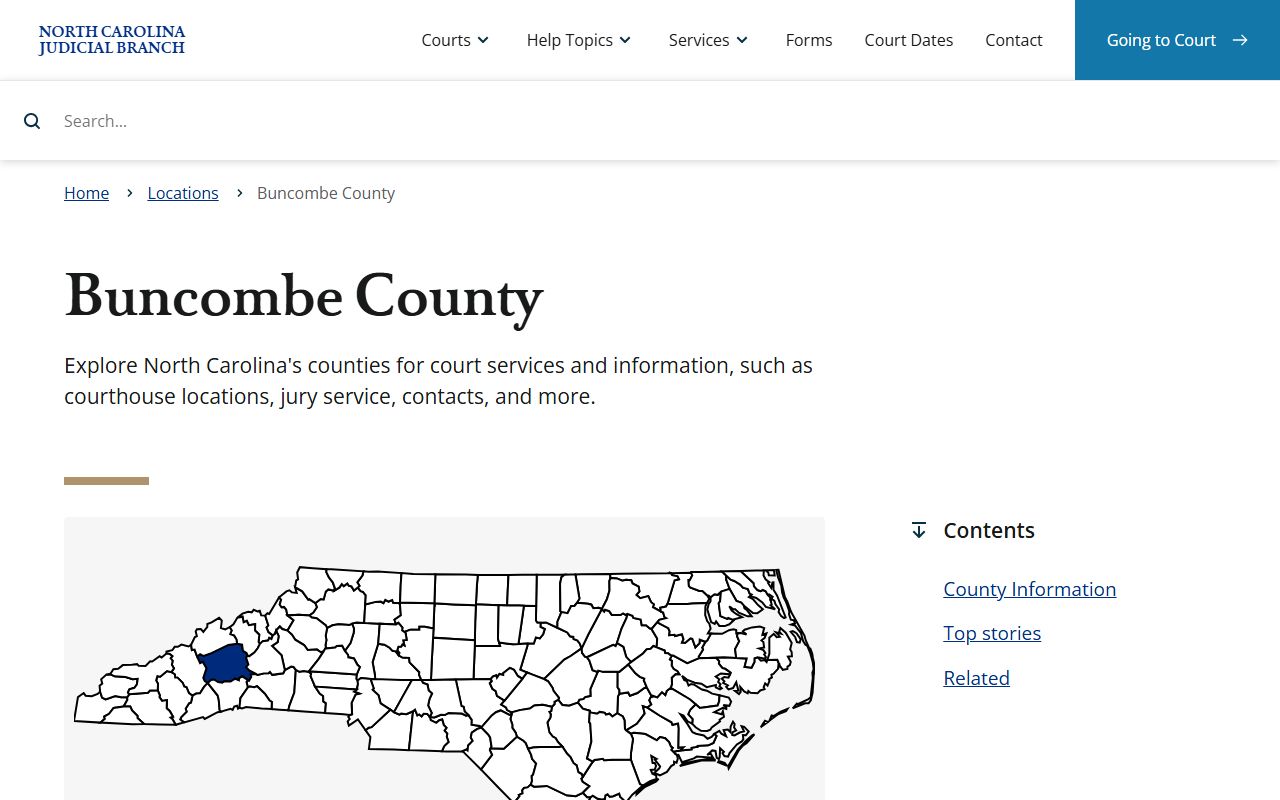
Buncombe County sees a high volume of real estate activity. Asheville is the largest city in western North Carolina, and property values have risen sharply in recent years. That growth means more foreclosure sales and more potential surplus funds. If you lost a home in Buncombe County, check with the Clerk first. After about one year, unclaimed surplus transfers to the State Treasurer. At that point, you would search through NCCash.com instead.
N.C. Gen. Stat. § 45-21.32 outlines the legal proceedings for determining who owns surplus funds. You may need to file a motion and attend a hearing. The court will review all claims and decide how to split the money if multiple parties have a right to it.
How to Find Unclaimed Money in Buncombe
Start your search at the NCCash claim search page. Type your first and last name. The system checks its database and shows any matches. You can also try MissingMoney.com for a national search across all states.
Filing a claim is straightforward. You will need a few documents to prove your identity and your right to the funds:
- A government-issued photo ID
- Proof of your Social Security number
- A document showing your current address
- Any records linking you to the unclaimed property
- Heir documentation if claiming on behalf of a deceased person
The NCCash Match program speeds things up for smaller claims. If your claim is $5,000 or less and your information matches state records, the Treasurer may send a check automatically. No paperwork needed. This program has helped thousands of North Carolina residents get their money back faster. Buncombe County residents benefit from this program given the sheer volume of unclaimed properties in the area.
Buncombe County Government Records
Buncombe County was formed in 1791 from parts of Burke and Rutherford counties. It takes its name from Edward Buncombe, a colonel who served in the Revolutionary War. The county seat is Asheville, a city known for its arts scene, tourism, and the famous Biltmore Estate. The Blue Ridge Parkway runs through the county, drawing millions of visitors each year.
The Buncombe County government website provides access to property records, tax information, and public services. You can find details about county departments and local programs on their official site.
The county has a population of roughly 275,000 people. Its economy relies on tourism, healthcare, and education. With that many residents and businesses, the pool of unclaimed money grows every year. Old accounts from hotels, restaurants, healthcare providers, and retail shops all contribute to the total.
Buncombe County Unclaimed Money Claims Process
Once you find a match on NCCash.com, the next step is filing your claim. The website walks you through each step. Simple claims get processed quickly. Claims involving estates or large sums take more time because the Treasurer must verify additional documents.
There is no deadline for filing. North Carolina has no time limit on unclaimed property claims under the state statutes. Your money stays in the system until you or your heirs claim it. The state does not charge any fee for the search or the claim. Be cautious of third-party finders who may contact you. Under N.C. Gen. Stat. § 116B-78, finder fees are capped at $1,000 or 20 percent of the claim value, whichever is less. You can always file on your own for free.
Note: The Treasurer's office can be reached at 866-NCCash1 (866-622-2741) for questions about your Buncombe County claim.
Heir Claims for Buncombe County Funds
Family members can claim unclaimed money that belonged to a deceased relative. This is common in Buncombe County given its large population and long history. Heirs need to prove their relationship to the original owner. A death certificate is required. Birth certificates, marriage licenses, or court orders help establish the family connection.
If the estate went through probate, letters testamentary or letters of administration from the Clerk of Superior Court serve as proof. If there was no will, North Carolina intestacy laws determine who gets the funds. The process takes longer than a standard claim, but the money is still yours. Legal Aid of North Carolina offers free help to residents who qualify. They can guide you through estate claims and surplus fund petitions in Buncombe County.
Dormancy Periods for Unclaimed Money
Not all unclaimed money follows the same timeline. North Carolina sets different dormancy periods based on the type of property. Knowing these periods helps you understand when funds might appear in the state database.
Utility deposit refunds become unclaimed after just one year. That short window means these funds show up in the system faster than other types. Securities like stocks and bonds follow a three-year dormancy rule. Most other property, including old bank accounts and uncashed checks, becomes dormant after five years with no owner activity. These rules come from N.C. Gen. Stat. § 116B-53.
Buncombe County's tourism industry creates a unique situation. Visitors leave deposits, buy gift cards, and open temporary accounts. When those funds go unclaimed, they eventually enter the state system. The high volume of tourism activity in Asheville and along the Blue Ridge Parkway means more money flowing into the unclaimed property pool each year.
Note: You can call the Treasurer at 866-622-2741 or mail claims to PO Box 20431, Raleigh, NC 27619-0431.
Nearby Counties
These counties border Buncombe County. If you have lived in more than one area, search each county. Unclaimed money is tied to the address on file at the time, not your current home.